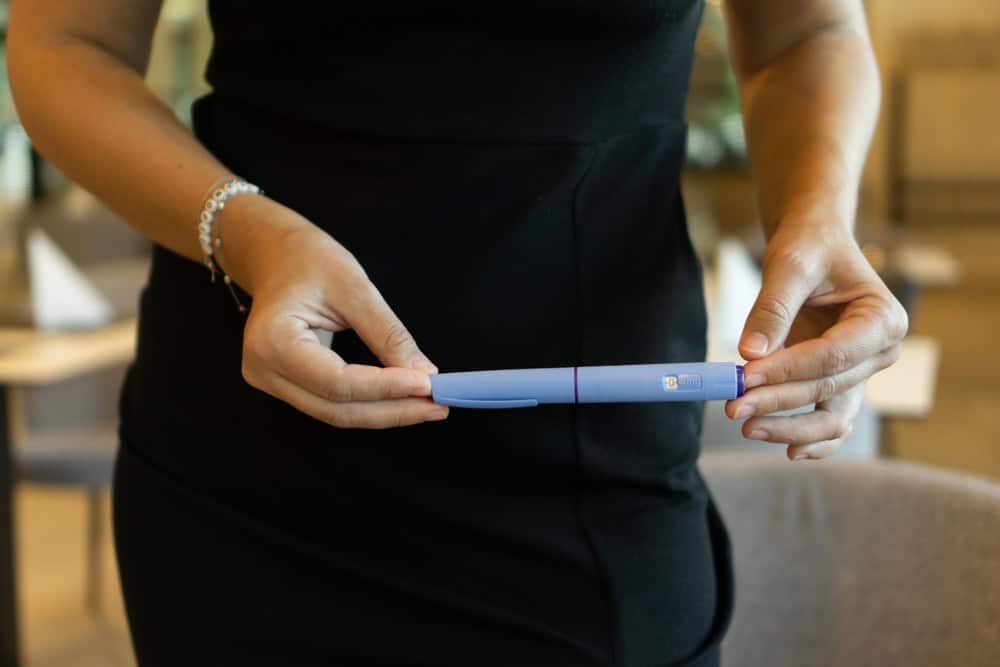
Most people taking weight loss medications are losing muscle without knowing it. Here is what to measure, what to monitor, and how to protect your body composition while still getting results.
Nicole Kelly, PA-C, Medical Director at Revitalize Medical Solutions, appeared on Good Things Utah (ABC4) to discuss what GLP-1 medications are really doing to your body and what most providers are not measuring.
Key Takeaways
- Up to 40% of the weight lost on GLP-1 medications can come from lean muscle mass rather than body fat, according to research published in Nature Reviews Endocrinology, 2025.
- Losing muscle mass slows your metabolism and is a primary reason so many patients regain weight after stopping their medication, per research from the Mayo Clinic published in The Lancet Obstetrics, Gynaecology, and Women’s Health, January 2026.
- Muscle loss in midlife women correlates strongly with decreased bone density and long-term functional decline, per Hurtado et al., Menopause journal, 2024.
- A DEXA body composition scan, not a standard scale, is the only way to know whether you are losing fat or muscle during treatment.
- Combining GLP-1 therapy with hormone optimization has been shown to preserve lean muscle mass and bone density while reducing common side effects like fatigue and hair loss.
Contents
- The problem most clinics are not measuring
- Why muscle loss is a longevity issue, not just a cosmetic one
- What the research says about doing this differently
- What this looks like in our Sandy, Utah clinic
- Questions to ask your provider before you start
- Why we wrote this
1. The Problem Most Clinics Are Not Measuring
Every week at our Sandy, Utah clinic, a patient walks in who has been on a weight loss medication for several months. They have lost weight. The number on the scale is lower. They feel like they should be thriving.
Then we run a DEXA body composition scan and the picture changes.
A significant portion of the weight they lost was not fat. It was muscle. In some cases, as much as 40% of the total weight loss came from lean mass. Nobody at their previous clinic had measured this. Nobody had even raised the question.
This is not an outlier. We are seeing it consistently, and the research is now confirming what we have been observing clinically for the past two years.
GLP-1 receptor agonists, the class of medications that includes the drugs commonly used for weight loss, work by suppressing appetite and slowing gastric emptying. They are effective at reducing caloric intake and producing significant weight loss. What they do not do on their own is distinguish between fat and muscle when the body starts burning through its reserves.
Without the right nutritional support, hormonal foundation, and resistance training, the body will sacrifice muscle mass alongside fat. And that trade-off has consequences that extend far beyond what the scale shows.
Key insight: The number on the scale tells you how much weight you lost. A DEXA body composition scan tells you what you actually lost. These are two very different pieces of information, and only one of them gives you the full picture.
2. Why Muscle Loss Is a Longevity Issue, Not Just a Cosmetic One
When patients learn they have lost muscle, the first response is often: can I just build it back? The answer is yes, but it is harder than it sounds, and the consequences of losing it in the first place are more serious than most people realize.
Muscle and metabolism are directly linked. How much lean muscle mass you carry is one of the strongest predictors of your resting metabolic rate. When you lose muscle, your body burns fewer calories at rest. This is the primary mechanical reason why so many patients regain weight after stopping their medication. Their metabolism has been functionally compromised by the muscle loss that occurred during treatment.
Muscle loss in midlife has serious downstream health implications. Research published in the journal Menopause in 2024 found that muscle loss during midlife, particularly in women, correlates strongly with decreased bone mineral density and long-term functional decline. A patient who loses significant lean mass during a weight loss course may find themselves more vulnerable to fracture, less capable of sustained physical activity, and metabolically worse off than when they started.
Visceral fat is the number that matters most. Standard scales measure total body weight. DEXA scans measure visceral fat, which is the fat that accumulates inside the abdomen around the organs. This type of fat is metabolically active and strongly associated with cardiovascular disease, type 2 diabetes, and certain cancers. You can lose significant total weight while your visceral fat remains dangerously elevated. Conversely, patients who address the root causes of body composition imbalance often see visceral fat drop dramatically even when total weight loss looks modest on the scale.
Nicole Kelly, PA-C, Medical Director, Revitalize Medical Solutions: “We are not anti-GLP-1. These medications work. What we are is pro-measurement. When you combine these medications with a comprehensive plan that protects muscle and addresses hormones, the outcomes are dramatically better and more durable. The medication becomes a tool rather than the whole solution.”
3. What the Research Says About Doing This Differently
The evidence base around GLP-1 medications and lean mass loss has developed rapidly over the past two years as clinical use has expanded.
A 2025 review published in Nature Reviews Endocrinology analyzed multiple studies on GLP-1 receptor agonists and body composition. The review found that in the absence of specific interventions, up to 40% of total weight lost on these medications can come from lean muscle mass. The authors noted that this proportion is significantly higher than the lean mass loss typically observed with diet and exercise alone, and that it represents a meaningful clinical concern for long-term metabolic health.
Research from the Mayo Clinic published in The Lancet in January 2026 examined outcomes in patients using GLP-1 medications with and without accompanying hormone optimization. Patients who received hormone support alongside their weight loss medication showed meaningfully better retention of lean mass and lower rates of weight regain after discontinuation. The study was observational rather than randomized, which limits conclusions, but the directional findings are consistent with what we have been observing clinically at Revitalize.
The mechanism appears to be straightforward. Estrogen and testosterone both play significant roles in preserving muscle mass and bone density, particularly during periods of significant caloric deficit. When these hormones are already suboptimal, as is common in women in perimenopause and menopause and men with low testosterone, the body is less equipped to protect lean tissue during rapid weight loss. Optimizing hormones before and during GLP-1 treatment creates a protective hormonal environment that helps the body preferentially shed fat rather than muscle.
Key insight: The patients who do best on GLP-1 medications are not the ones on the highest doses. They are the ones whose underlying hormonal and metabolic environment has been optimized so the medication can do its job efficiently and safely.
4. What This Looks Like in Our Sandy, Utah Clinic
At Revitalize Medical Solutions, we have been using DEXA body composition scanning as a clinical monitoring tool for years. When GLP-1 medications became widely available, we did not change that approach. We built it into our standard protocol.
Every patient who starts a weight loss protocol at our Sandy, Utah clinic gets a baseline DEXA scan before they begin. We measure total body fat percentage, lean mass, bone density, and visceral fat. We run a comprehensive labs panel that includes a full hormone workup, thyroid markers, metabolic indicators, and inflammatory markers. This gives us the full picture of where the patient is starting from.
We then use that data to design a personalized protocol. For patients whose hormones are suboptimal, we address that before or alongside the weight loss medication. We give specific protein targets and resistance training guidance calibrated to the patient’s current lean mass. We set a follow-up DEXA schedule, typically at three and six months, so we can track exactly what is changing and adjust the protocol accordingly.
The results we are seeing at our Sandy, Utah clinic are consistent with what the research would predict. Our patients are losing fat. They are retaining and in many cases increasing lean muscle mass. Their bone density is either holding steady or improving. And critically, they are maintaining their results after the active weight loss phase ends.
One patient example: A woman in her early 50s came to us after trying a weight loss medication at another clinic where her hormones were never evaluated and no body composition monitoring was done. She stopped her previous medication because she felt terrible and was not getting results. At Revitalize, we ran a comprehensive baseline. Her hormones were significantly suboptimal, her thyroid was undertreated, and her body composition numbers revealed she had been losing muscle rather than fat during her prior treatment.
We optimized her hormones, adjusted her thyroid protocol, started her on a weight loss medication at the lowest effective dose, and gave her specific protein and resistance training targets. We tracked her body composition with DEXA scans every few months throughout her treatment.
She went from 220 pounds to 150 pounds over approximately 18 months. Her body fat percentage dropped from 50.6% to 39.6%. She lost over 44 pounds of fat mass. Her lean muscle mass was preserved throughout the entire process. Her bone density improved by 1.5% over the same period, moving in the opposite direction from what we typically see in women her age who are in rapid weight loss. She has maintained those results for two years. In her own words: everything is just cruising along.
Her DEXA scans are available on our GTU landing page with her full written consent.
This is what comprehensive body composition monitoring looks like in practice. It is not just weight loss. It is body recomposition, and the difference is measurable.
Key insight: A DEXA scan before you start is not optional. It is the only way to know whether your treatment plan is actually working in the right direction.
5. Questions to Ask Your Provider Before You Start
If you are considering a GLP-1 medication or are currently on one, here are the questions we recommend asking your provider before continuing.
Are we going to track body composition, not just weight?
A scale tells you how much you weigh. It does not tell you whether you are losing fat or muscle. If your provider is not measuring body composition with DEXA scanning at baseline and at regular intervals during treatment, you have no way of knowing whether your treatment is working in the right direction. This is not optional monitoring. It is essential.
Are my hormones part of the picture?
Hormone status directly affects your body’s ability to preserve lean mass during rapid weight loss. If you are a woman in perimenopause or menopause, or a man with declining testosterone, starting a GLP-1 medication without evaluating and optimizing your hormones first is like trying to build a house without a foundation. Ask for a comprehensive hormone panel, not just a basic thyroid screen.
What is my protein and resistance training plan?
Adequate protein intake and resistance training are the two non-negotiable behavioral components of preserving muscle during GLP-1 treatment. GLP-1 medications suppress appetite, which often reduces protein intake precisely when the body needs it most. If your provider is not giving you specific protein targets and a resistance training framework, the muscle loss risk goes up significantly.
What is the off-ramp?
What happens when you stop the medication? If you have not addressed the underlying hormonal and metabolic root causes of your body composition challenges, stopping the medication often leads to weight regain. Ask your provider what the long-term plan is. If the answer is simply to stay on the medication indefinitely, that is worth a deeper conversation.
We tell every patient who comes through our Sandy, Utah clinic the same thing: the medication is one tool. The goal is to build a metabolic foundation strong enough that you do not need to stay on it forever. That requires a comprehensive approach from the beginning.
6. Why We Wrote This
We are not writing this to discourage anyone from using weight loss medications. These medications are effective and, for many patients, genuinely life-changing. We use them at Revitalize Medical Solutions and we have seen remarkable outcomes.
We are writing this because the clinical reality of widespread GLP-1 use is outpacing the quality of monitoring and support most patients are receiving. Most clinics prescribing these medications are not measuring body composition. Most are not evaluating hormones. Most are not giving specific protein and resistance training guidance. And most patients have no idea that up to 40% of the weight they are losing might be coming from lean muscle rather than fat.
At Revitalize Medical Solutions, we have been doing hormone optimization and body composition monitoring in Sandy, Utah since 2016. We have served over 6,000 patients. Our average patient stays with us for nearly four years. That retention is not an accident. It reflects what happens when you build a plan around data rather than guessing.
If you are on a weight loss medication and you have never had a DEXA body composition scan, now is the time to get one. If you are considering starting one and you have not had your hormones evaluated, start there first. The difference between losing weight and losing fat is not just semantic. It is the difference between a result that lasts and one that does not.
The Bottom Line
GLP-1 medications work. They produce real, significant weight loss for many patients. But up to 40% of that weight loss can come from lean muscle rather than fat, and most clinics prescribing these medications are not measuring this. Losing muscle slows your metabolism, increases your risk of rebound weight gain, and has serious implications for bone density and long-term function. The solution is not to avoid these medications. It is to use them as part of a comprehensive plan that includes a baseline DEXA body composition scan, a full hormone evaluation, specific protein and resistance training targets, and regular body composition monitoring throughout treatment. At Revitalize Medical Solutions in Sandy, Utah, this is how we have been approaching weight loss and body recomposition for nearly a decade. The results speak for themselves.
Frequently Asked Questions
Research published in Nature Reviews Endocrinology in 2025 found that up to 40% of total weight lost on GLP-1 medications can come from lean muscle mass rather than body fat. This varies significantly based on protein intake, resistance training, hormone status, and the specific protocol being used. Patients who receive comprehensive support including hormone optimization, adequate protein, and resistance training typically experience significantly lower rates of muscle loss.
The only reliable way to know is a DEXA body composition scan. Standard scales measure total body weight and cannot distinguish between fat loss and muscle loss. A DEXA scan takes approximately 15 minutes, is non-invasive, and gives you a precise measurement of fat mass, lean muscle mass, bone density, and visceral fat. We recommend getting a baseline scan before starting any weight loss medication and follow-up scans at three to six month intervals during treatment.
Yes, but it takes time and the right conditions. Muscle hypertrophy requires adequate protein, consistent resistance training, and for many patients in midlife, optimized hormone levels. The most effective approach is to prevent significant muscle loss in the first place by addressing hormones and nutrition before and during GLP-1 treatment rather than trying to rebuild afterward.
The primary mechanical reason is that significant muscle loss during treatment lowers resting metabolic rate. When the medication is stopped and appetite returns to normal, the body is now burning fewer calories at rest than it was before treatment began. This metabolic deficit makes weight regain almost inevitable unless the underlying muscle loss is addressed. Patients who preserve lean mass during treatment and address root hormonal causes are significantly less likely to experience rebound weight gain.
Visceral fat is the fat that accumulates inside the abdominal cavity around the organs, as distinguished from subcutaneous fat which sits under the skin. Unlike subcutaneous fat, visceral fat is metabolically active and is strongly associated with cardiovascular disease, type 2 diabetes, insulin resistance, and certain cancers. A standard scale cannot measure visceral fat. A DEXA scan provides an estimate of visceral fat area and mass, which is one of the most clinically meaningful numbers we track at our Sandy, Utah clinic.
We strongly recommend it. Hormone status, particularly estrogen, testosterone, and thyroid function, directly affects your body’s ability to preserve lean muscle mass and bone density during rapid weight loss. Women in perimenopause and menopause and men with declining testosterone are particularly vulnerable to muscle loss if their hormones are not evaluated and addressed before treatment begins. A comprehensive hormone panel goes well beyond what standard primary care typically orders.
DEXA stands for Dual-Energy X-ray Absorptiometry. It uses two low-energy X-ray beams to measure the density of different tissues in the body, distinguishing between fat mass, lean muscle mass, and bone. The scan takes approximately 15 minutes, requires no special preparation, and is completely non-invasive. At our Sandy, Utah clinic, we use DEXA scanning as an ongoing clinical tool rather than a one-time measurement, running follow-up scans at regular intervals to track exactly what is changing during treatment.
When hormone levels are suboptimal, particularly estrogen and testosterone, the body is less equipped to preserve lean tissue during periods of significant caloric deficit. Optimizing hormones before and during GLP-1 treatment creates a protective hormonal environment that helps the body preferentially lose fat rather than muscle. Research from the Mayo Clinic published in The Lancet in January 2026 found that patients who received hormone support alongside their weight loss medication showed meaningfully better retention of lean mass compared to those on medication alone. At Revitalize, we also see patients experience fewer common GLP-1 side effects, such as fatigue and hair loss, when their hormone levels are well-managed.
Revitalize Medical Solutions operates as a cash-pay practice. We do not accept insurance. Patients choose us because they want a level of comprehensive, personalized care that the standard insurance-reimbursed model does not support. Our membership includes the testing required to do this right, with no surprise lab charges.
Call or text us at 801-999-8252 or visit our website at revitalizemedicalsolutions.com to schedule a free consultation. Our Sandy, Utah clinic is located at 11075 South State Street, Suite 21. We will start with a comprehensive baseline, including a DEXA body composition scan and a full labs panel, and build a personalized plan from there.
Have you ever had a baseline DEXA body composition scan?
Most people on weight loss medications have not. It is the single most important piece of data you can have before you start.
SCHEDULE A FREE CONSULTATION AT OUR SANDY, UTAH CLINIC → revitalizemedicalsolutions.com/contact-us
References
- Barrea L, et al. “GLP-1 receptor agonists and body composition: implications for lean mass preservation.” Nature Reviews Endocrinology. 2025. https://www.nature.com/nrendo
- Hurtado MD, et al. “Weight loss interventions and skeletal muscle mass in postmenopausal women.” Menopause. 2024. https://www.menopause.org
- Mayo Clinic / The Lancet Obstetrics, Gynaecology, and Women’s Health. “GLP-1 therapy outcomes with and without hormone optimization in midlife women.” The Lancet. January 2026. https://www.thelancet.com
- Makary M, et al. “FDA label changes for menopausal hormone therapy.” JAMA. November 2025. https://jamanetwork.com
- Bone Health and Osteoporosis Foundation. “Osteoporosis fast facts.” https://www.bonehealthandosteoporosis.org
Reviewed by Nicole Kelly, PA-C · Medical Director, Revitalize Medical Solutions · Sandy, Utah · All clinical claims verified prior to publication · Document version 1.0
Related Articles: